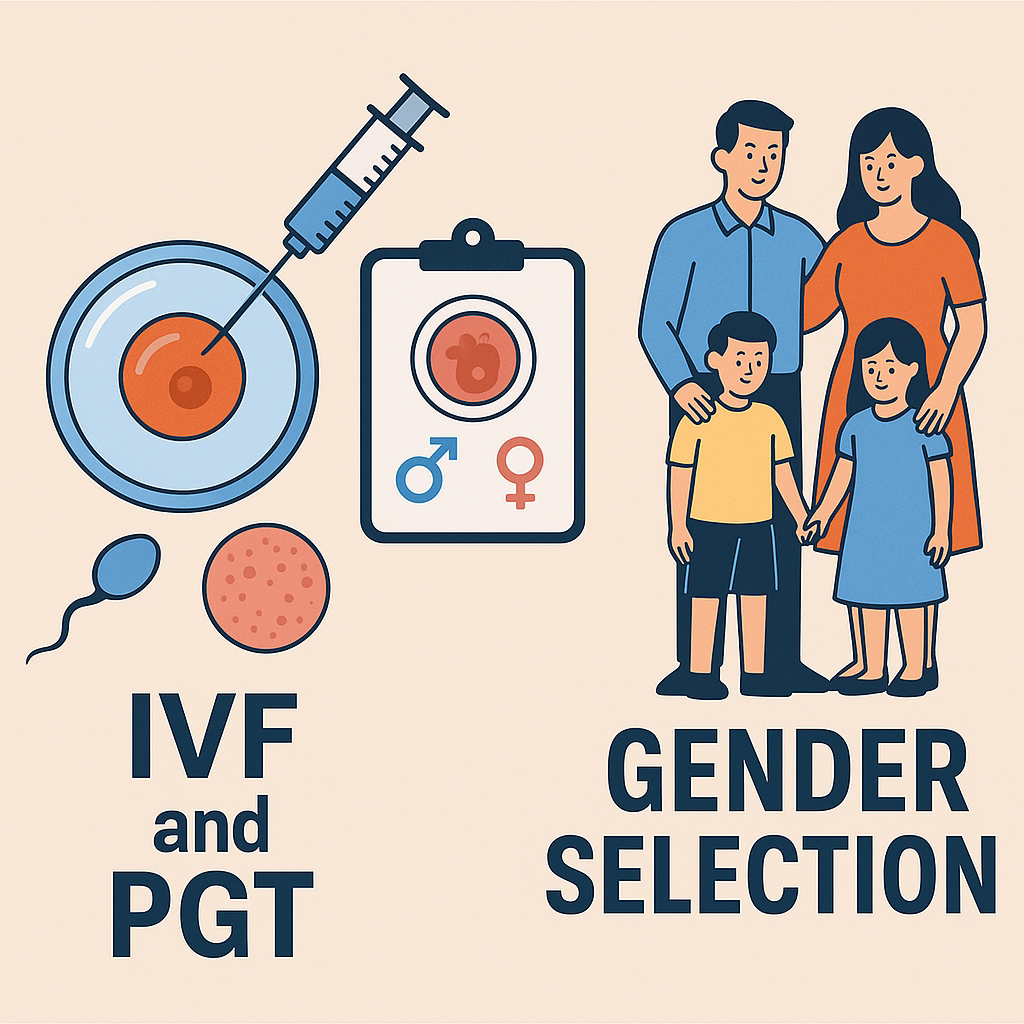
IVF is a process in which eggs and sperm are fertilized outside the body, and then the embryo is implanted into the uterus. PGT is used to screen embryos that may be at risk for genetic disorders. This process can also determine the sex of the embryo, which is sometimes used for family planning.
Sex selection can help prevent genetic disorders, especially in families with a history of sex-linked conditions. Some families also wish to have one son and one daughter to maintain a balanced family.
In India, sex selection faces legal and cultural challenges. Under the Pre-Conception and Pre-Natal Diagnostic Techniques (PCPNDT) Act, sex selection is strictly prohibited to prevent female feticide and to maintain gender balance. Traditional mindsets and a male-dominated society often create pressure for male children, which can negatively impact the female-to-male ratio.
Although banned in India, sex selection is legal in countries like Dubai, Thailand, UAE, USA, and Russia. As a result, many affluent Indian families travel abroad to access IVF and PGT-A services, choosing the gender of their child where it is permitted. Poor and middle-class families in India do not have this option. As a result, some families have multiple daughters while waiting for a son, or multiple sons while hoping for a daughter. This leads to larger families, contributes to population growth, and, due to financial hardship, affects children's upbringing and quality of life.
To successfully implement the two-child policy, the Indian government should consider revising the PCPNDT Act and allow sex selection under specific conditions. Permission could be granted only to couples who already have one child. If the first child is a boy, only the selection of a girl should be allowed for the second child, and if the first child is a girl, only a boy should be allowed.
These measures could help control population growth, maintain family balance and gender ratio, and support the dignity and well-being of both parents and children.